Sailing the Seas of Cheese
Nope. This is not about Jerry or his Racecar. Neighbor friends had more goat milk than they needed, couldn’t store it, and didn’t want to throw it out. So? They offered it to me. They figured at least it could go to the pigs and increase the marbling. They were, of course, right, but that is not what I wanted to do. I wanted to experiment with something that I always wanted to do. Maybe not always, but for a while. I wanted to make milk products. Tiffany has enjoyed cream from goat milk for quite a while as I learned how to separate out the cream. Goat and sheep milk are naturally homogenized, so it is a little different than cow milk. I haven’t completely abandoned technology in my evolution towards being aged. I did it by hand for a while, and then got a separator. I love that thing. I have yet to use it without making a mess, but I will get there.
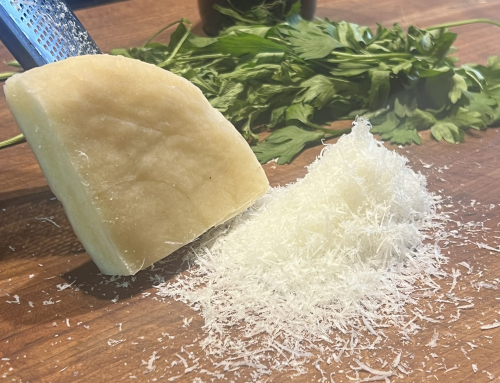
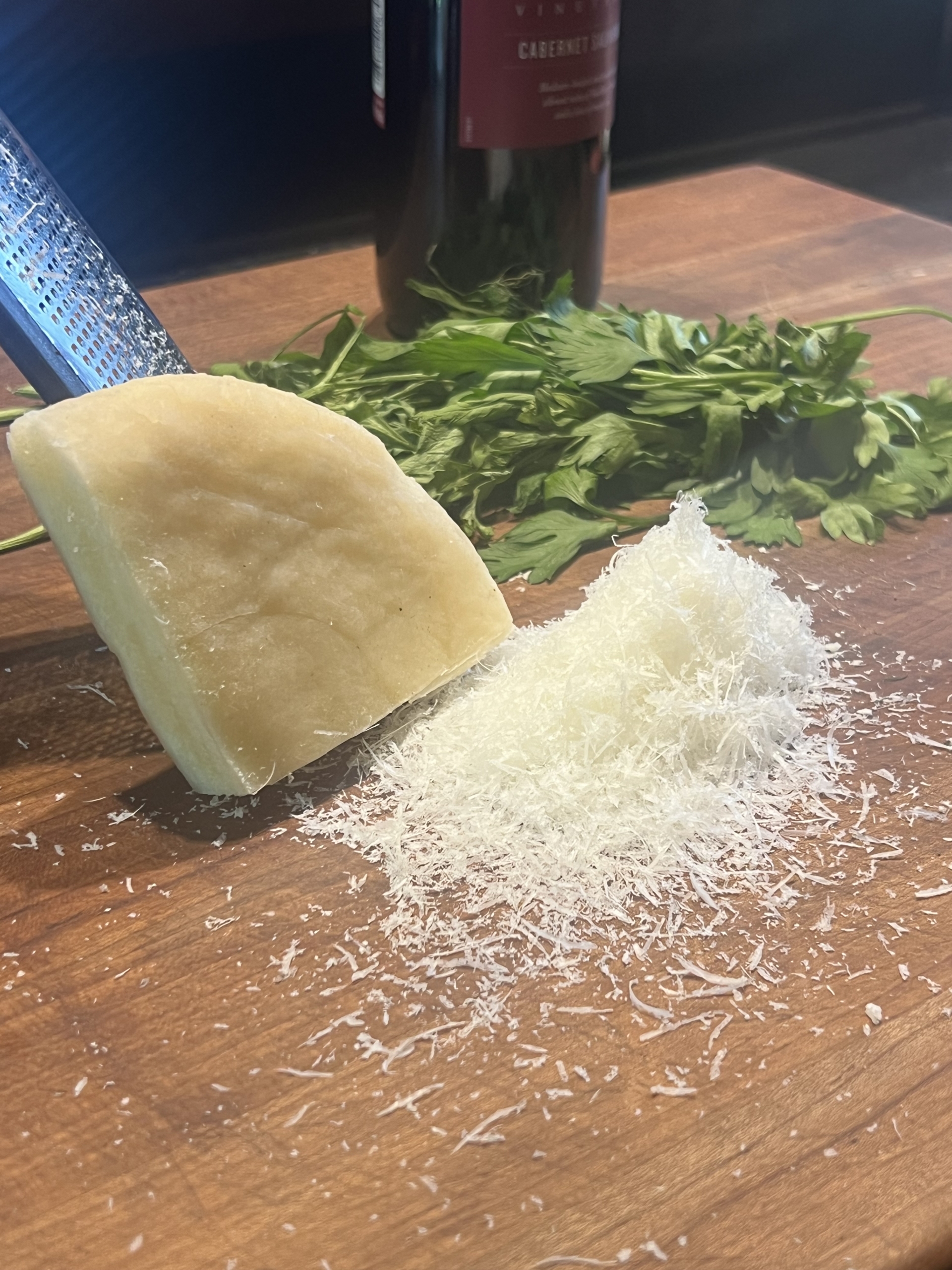
I then moved on to something else: parmesan. I have two wheels of parmesan in my “cheese cave.” That’s a horrible term for the fiasco that I have going on trying to keep my cheeses around 52 degrees. We don’t need to talk about that right now… or ever. At any rate, I have two cheese wheels of parmesan that are maturing. In several months, I will try one and see if it was worth it. When they went into the “Cave,” they smelled wonderful. I don’t figure the milk train will go much longer so I decided to try a more difficult cheese… cheddar.
I chose a recipe that was not too much more difficult than the parmesan. I am embarrassed to write that. Time will tell if it works out, or not. Tiffany loves cheddar, so I’m sure there will be no holds barred if I screwed the pooch. The shortcut involved something I only recently learned: cheddaring. My version of cheddaring was the weak way. It will be the weak way tomorrow when I make my second cheddar. Kiss my derriere. In the future, I will try true cheddaring. I have a lot of cheeses that I still want to make. It’s amazing the uses of milk that we can thoroughly enjoy, but take a lot of time. Tiffany often says that we can’t have a milk animal because we don’t use that much milk, but aside from the time it takes to make dairy products, I would disagree. Note: she still looks for A2/A2 mini-jerseys all the time.
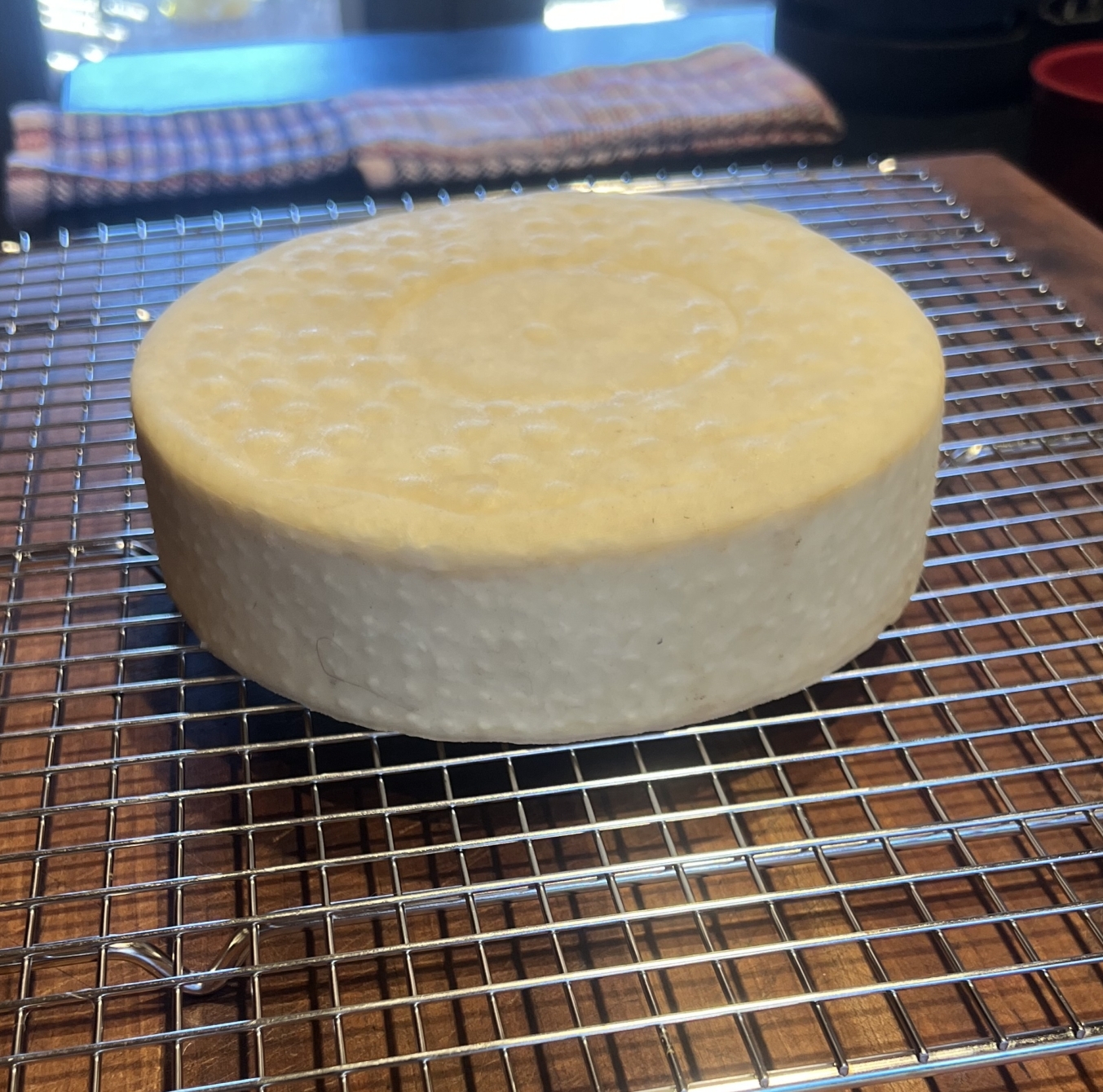
The first picture above shows my 3 pound cheddar cheese… the first cheddar. Yes. It is white. It turns out there are some stories about why we have orange cheeses. Ultimately, it does not seem to be a natural thing. There is a nut extract that is used to make cheese orange. I am against unnecessary additives to create our food. There is absolutely no reason to keep adding crap to our food. Commercial producers have constantly added stuff to our food that is so unnecessary, and has ultimately proven to be unhealthy for us. So, my next cheddar will be orange… I’m such a failure. Bite me. I just want to see if it makes a real difference.
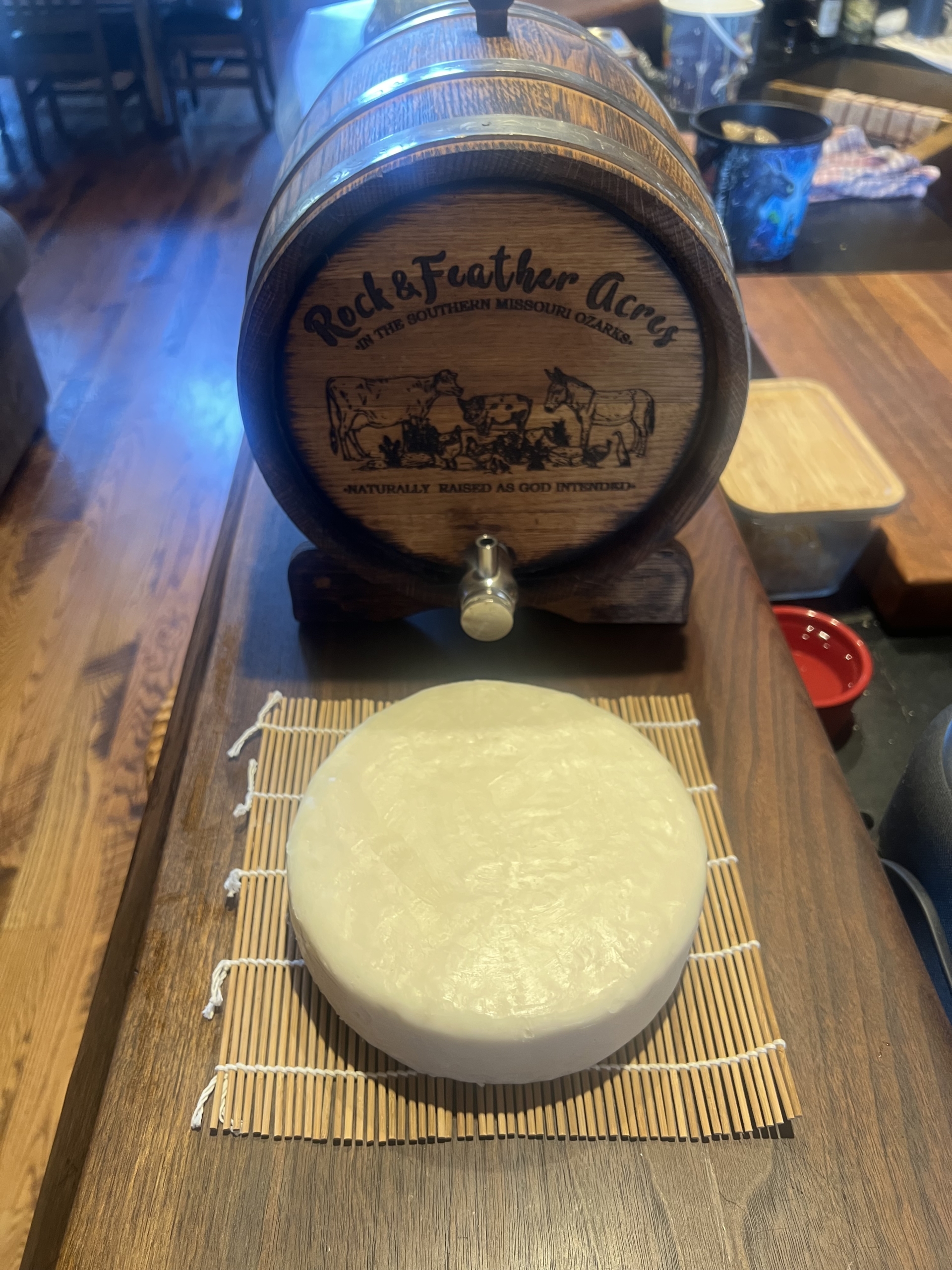
Strangely, I am post excited about the preservation for my first cheddar that needs to cure for six months or more. You, like I have been, are most likely used to cheeses that are waxed. It turns out there is an older method of preservation that makes me very happy. Once again, I can use something we created to make wonderful (hopefully) food. This other method is typically called “Bandaging.” The second picture associated with this post is my prepared cheddar that is going to mature for at least six months. I will most likely do the same thing to the second one… yeah… the orange one. Bandaging involves cutting cheese cloth to fit tightly around the cheese wheel, and then coat it with lard.
It just so happens that I have lard rendered from the fat of one of our own hogs. In a few months, I will have even more lard. Ignore what you have been told about lard just like I hope you have ignored what they told us in the 80s and 90s about butter… as if margarine is better for you. Look up the history and the understanding of margarine now. I will quote Reagan for a moment. “The most frightening words you could ever hear: I am from the government, and I am hear to help you.” At any rate, several days ago I set to work on bandaging my cheese. I do not believe I did it the same way that I saw others do it, but I am very pleased with it. Honestly, I think I may have three layers on some surfaces, but I know I have at least two layers on every surface. There is at least a pint of wonderful lard sealing that cheese away from any harmful infiltrators.
The purpose of the lard is not about flavor or enhancing anything. It’s sole purpose is to provide a barrier against any nasties that might want to attack the cheese. Cheddars are not supposed to have mold. The lard is intended to protect the cheddar. It will sacrifice itself like the roosters and drakes that have sacrificed themselves on our little farm protecting the females. Lard itself is very shelf stable as long as it is pure and water free. The thick layer on the cheese however, will be subject to high humidity, and unfortunately, wavering temperatures that will no doubt cause variations and opportunities for infections every time I open the “Cave” to flip the cheeses as they progress on their curing journeys. I expect in six months the bandaged cheddar will be coated. in. mold. Not just one mold. Several.
At which time, I will scrape all the bandaging off to see a pristine cheese. I’ll cut into wedges, vacuum seal all but one, and proceed to enjoy cheese! I love cheese. By the way, the same thing will happen to the parmesans, but they are already vacuum sealed for their curing… BRING ON THE CHEESE.
Cottage cheese is soon on the list…
Related Posts


All hard work brings a profit, but mere talk leads only to poverty. – Proverbs 14:23